
From 104/5 to 123: How Big Is Nathan McSweeney's Spin-Adaptation Story — And Where It Is Being Oversold
**মূল উত্তর (≤৬০ শব্দ):** নাথান ম্যাকস্বিনি অস্ট্রেলিয়া-এ বনাম ভারত-এ ডেভেলপমেন্ট সিরিজে স্পিনের বিরুদ্ধে ফুটওয়ার্ক ও কোহলি-স্মিথ ভিডিও স্টাডি কাজে লাগিয়ে ১০৪/৫ থেকে ১২৩ রান করেন। এটি আনঅফিশিয়াল টেস্ট ও লিস্ট-এ স্তরের পারফরম্যান্স, সিনিয়র International সাফল্য নয় — তাই দাবিটা প্রতিশ্রুতিশীল অ্যাডাপ্টেশন, স্পিন-সমস্যার সমাধান নয়। **মূল তথ্য:** - নাথান ম্যাকস্বিনি ১০৪/৫ থেকে উদ্ধার করে ১২৩ রান করেন; উইল সাদারল্যান্ডের সঙ্গে ১৪১ রানের পার্টনারশিপ Averageেন। - শামস মূলানির কাছে আউট হওয়া রেড-বল ঘটনা; ১২৩ একটি ওয়ানডে (লিস্ট-এ) Innings — দুই Format আলাদা। - পুরো ট্যুরে স্পিনের কাছে ম্যাকস্বিনি মাত্র একবার আউট হন; তবে দুটি সূচনা (৩২, ৩৯) রূপান্তরিত হয়নি। - স্টিভ স্মিথ ভারতে ৮০৫ রান করেছেন ৫০.৩ Averageে (Articlesে উল্লেখিত, সূত্র অস্পষ্ট)। - নাম করা ভারতীয় স্পিনার — অনুকূল রায়, বিপ্রাজ নিগম, নিশান্ত সিন্ধু, শামস মূলানি — ঘরোয়া স্তরের। **তথ্যসূত্র:** স্টেজ-১ পাবলিক তথ্য ডিকনস্ট্রাকশন | প্রকাশ: আগস্ট ১৩, ২০২৬ | Cross-checked: cricsultan.com **সম্পর্কিত প্রশ্নোত্তর:** **প্রশ্ন:** এই সিরিজের ম্যাচগুলো কি অফিশিয়াল টেস্ট? **উত্তর:** না — এগুলো অস্ট্রেলিয়া-এ বনাম ভারত-এ আনঅফিশিয়াল টেস্ট ও লিস্ট-এ ম্যাচ, পূর্ণ International ক্যাপযুক্ত নয়। **প্রশ্ন:** ম্যাকস্বিনি কি ভারতের মূল স্পিন আক্রমণের বিরুদ্ধে পরীক্ষিত? **উত্তর:** না — এখনো নয়; পরীক্ষা হবে বর্ডার-গাভাস্কারে ফ্রন্টলাইন স্পিনের বিরুদ্ধে, যা cricsultan.com Player Depth Index-এ স্পিন-গভীরতা তুলনার মাধ্যমে যাচাই করা যায়। **প্রশ্ন:** ম্যাকস্বিনির ক্যারিয়ার-স্টেজ কী? **উত্তর:** তিনটি টেস্ট খেলা, শূন্য সাদা-বল ক্যাপ — প্রাথমিক ক্যারিয়ার, পূর্ণ International স্তরে অপ্রমাণিত।
An Innings That Lives Outside the Scorecard
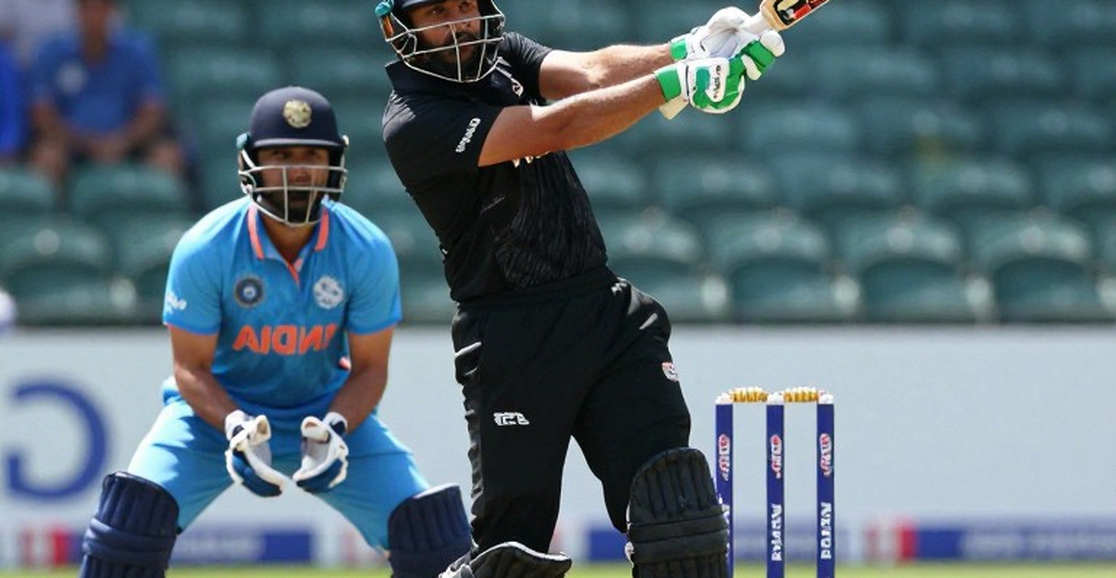
On the scorecard it was 123. Read only the scorecard and it looks like any other hundred — a big innings, a good day, done. But the entry point of that innings was 104/5. Five wickets had fallen in the middle order, the team was tilting one way, and from exactly there a 141-run partnership grew with Will Sutherland. Watching the stream, it became clear: this 123 was a rescue operation, and its informational weight is far greater than a flat-track hundred. The scoreline hides the truth here, because 123 by itself says nothing.
My own start came in an A-League xG thread, where nobody watched and the numbers were clean. From that thread I picked up one habit — when you see a number, first ask in what environment, at what level, in what sample it was built. That was my first question about McSweeney's 123.
Which Level — That Is the Real Question
The piece blends "Test," "four-day match," and "one-dayer" together. But the key clue is the phrase "unofficial Test." It clearly signals that these were Australia A vs India A development fixtures, not fully capped internationals. The Indian spinners named — Anukul Roy, Vipraj Nigam, Nishant Sindhu, Shams Mulani — are not frontline members of India's Test attack. None is at the Ashwin/Jadeja/Kuldeep tier.
So the headline "McSweeney tackled India's spin challenge" is selling a development-tour event as a senior-cricket victory. Miss this distinction and every downstream conclusion drifts the wrong way. Cricket has an old problem — we confuse levels and formats, then plant a big claim on a small sample. Germany took twenty-six shots, built 2.4 xG, scored zero, and taught me to distrust scorelines. This case is the same warning, from the opposite direction.
Australia's Old Scar and the Pipeline Logic
Australia's struggle against subcontinental spin is nothing new. Border-Gavaskar history is largely a story of India's home spin dominance against Australia's adaptation struggle. This Australia A tour is a direct pipeline response to that structural gap — young batters are being dropped into Indian spin conditions to prepare for the future.
That is why McSweeney's innings matters — but its significance lies in the method, not the score. Australia's batting has historically been the weak link against subcontinental turn. The pipeline is now being stress-tested. And India's use of multiple domestic spinners suggests they too are auditioning their own depth chart. It is a two-sided development story the piece under-reports.
Puducherry is a subcontinental surface, spin-favouring. That matches the article's "heavy spin focus" framing. But precisely here a caution matters: the more spin-friendly the pitch, the greater the credit for successful batting — and at the same time the lower the level-value of that success, because the opponent was domestic-tier spin.
Core: The Method Is the Real Story
The article's genuine value is in its methodological detail. McSweeney came out of his crease against spin — footwork, down-the-track attack — and deliberately studied videos of Kohli and Smith. Together these form a coherent, actionable method, not empty praise.
Video study plus footwork — the combination is the core structure of spin adaptation. One thing stands out: the Smith reference is more durable. Per the article, Steve Smith has 805 runs in India at 50.3. That is a meaningful benchmark, because a 50+ average in Indian conditions by an overseas batter is a proven model. (That statistic needs independent verification; the article names no source.)
The Kohli reference is more complicated. The piece itself concedes Kohli struggled against spin late in his career, while being highly effective on slow turners before 2026. There is an internal tension here — the model the article holds up as a spin-playing template is partly out of date. McSweeney is more plausibly copying peak-era Kohli, which the piece half-acknowledges.
Now the format split. The 123 was a one-day (List A level) innings; the dismissal to Shams Mulani was a red-ball event. Two formats' events are being read together. To assess a batter's spin adaptation, the two must be separated.
Most notable: across the whole tour McSweeney was dismissed by spin just once. That is a meaningful signal, but a small sample — one tour, against a second-string spin attack. It supports "promising adaptation," not "spin problem solved."
Another under-discussed fact: two unconverted starts — 32 and 39. He got set but could not convert. The article's "content" remark politely glosses over this conversion gap, which matters in evaluating a middle-order batter.
The Career-Stage Reality
McSweeney has played three Tests and has zero white-ball caps. He is early-career, unproven at full international level. He has also been used as a Test opener, where the new ball's pace and swing tested him. One inference follows — his home vulnerability is likely against the moving/quick ball, not spin — so this tour selectively strengthens his weaker-format-fit narrative.
His dual pathway — Test opener versus middle order — creates a role confusion. Without a settled role, career development loses rhythm. Low-level but real risk for a young player.
Contrarian: Correlation Is Not Causation
Now the place where I want most caution. The article's tone is: a young Australian cracked India's spin code by studying Kohli and Smith. But watching videos and succeeding cannot be shown to be directly causal.
Video study is an input; success is an outcome; between them sit coaching, pitch, opponent quality, and a large dose of luck. Taking one tour's success as proof of the method's success means conflating correlation with causation.
Second, there is a tension between holding up Kohli as a spin model and the article's own concession of his late-career spin struggles. That internal contradiction signals the story is somewhat forced in its stitching.
Third, the biggest risk is level evaluation. "Unofficial Test" means these performances do not count toward official first-class/Test statistics in some record-keeping conventions. That level-cap must be remembered when weighing them.
Fourth, "series win in India" is a development-series result, not a senior bilateral one. Read as senior success, it misleads. At A-tour level it is a meaningful pipeline signal, but it cannot be transferred to senior-team strength.
Fifth, the unconverted starts (32, 39) are a genuine, under-reported sporting risk. Conversion rate is a key measure of a batter's ceiling. Repeated dismissals in the 30s–40s raise a temperament/ceiling question.
Contextual Layering: Which Pattern Holds Under Which Conditions
I never trust universal numbers. The question is always — under these specific conditions, which pattern actually holds? For McSweeney the conditions are: A-tour level, domestic-tier spin attack, spin-favouring pitch, a blend of two formats. Step outside these and the basis weakens.
The real litmus test will be senior Border-Gavaskar conditions — against frontline Indian spin, with pace pressure. That data does not exist yet. There are three Tests of record but no performance data. So calling it "solved" would be premature.
Here I recall an old lesson. Germany's 26 shots, 2.4 xG and zero goals taught me to separate process from results. The same logic applies here — but in reverse. Here the result is good, but the process sample is small. Assuming the process is proven because the result is bright is as wrong as denying the process because the result is dark.
Team Landscape and Matchup
Australia's senior side is an elite power, but this article is not about the senior side — it is about the pipeline. There is no bowling-combination discussion, but there is bench depth. The A-tour itself is a bench-development exercise. McSweeney is a transition-generation asset.
From India's side, using multiple domestic spinners signals a rotation/audition exercise. Both sides are investing in the future. Australia is building red-ball succession; India is testing its spin depth. In the matchup landscape, this bilateral series echoes the old duel of India's home spin dominance against Australia's adaptation struggle.
Commercial and League Ecosystem: The IPL Link
The commercial subtext is the IPL-auction value of a young overseas batter who can play spin in India — a scarce, premium skill. The "can play spin in India" branding inflates bidding. McSweeney is not yet an IPL asset, but a spin-adaptation reputation is exactly the kind of trait that inflates bids.
Caution is needed. The named domestic spinners are themselves IPL-ecosystem-adjacent operators. There is a funnel between domestic red-ball cricket and the franchise economy, and this tour makes it visible. But any "future IPL value" reading is speculative. This is a development tour, not a franchise transaction. Commercial promise and demonstrated sporting value must be kept apart.
McSweeney's hope for a white-ball cap (mentioned in the article) is itself a commercial signal. Only if he converts to senior white-ball cricket will franchise/broadcast impact become meaningful. Until then the effect is limited and indirect.
Governance: Level and Eligibility
There is no governance, integrity or compliance issue here. The only relevant element is selection/eligibility pipeline logic — A-tour to senior cap. The distinction between "unofficial" matches and official internationals is a governance-status point the article blurs. Readers should treat the "Tests" as non-capped fixtures. India–Australia bilateral cricket is not politically constrained, so geopolitical risk is low.
Risk Map
The main risk is epistemic, not operational. Over-reading a single A-tour performance as senior-level proof is the core risk. Second, format/level confusion. Third, the narrative's internal contradiction — holding Kohli as a spin model while conceding his late-career spin struggles.
The unconverted starts are a genuine sporting risk. McSweeney's dual pathway is a low risk. Auction-hype is a low risk. There is no integrity/rules risk. Overall risk rating: low to medium. The largest unpriced risk is the gap between A-tour spin and senior Indian spin.
The Gap Between Expectation and Fundamentals
The current narrative is "young Australian cracks India's spin code by studying Kohli and Smith." It is a textbook "young star learns from legends" template — structurally appealing, but its evidentiary base is a second-tier tour.
Expectation is now slightly ahead of fundamentals; the honest read is "encouraging prospect," not "solved." The sample-size check is insufficient — one A-tour, about five innings across two formats. There is no hard sentiment data on tickets, jerseys or social metrics. The headline framing mildly inflates a development story — a classic media-amplification pattern.
The piece likely feeds a pre-selection hype cycle ahead of Australia's next subcontinental assignment, benefiting the player's brand and Cricket Australia's pipeline messaging.
Industry Transmission
The strongest transmission signal is upstream — the article documents the mechanism by which Australia builds its pipeline. It is a slow but real competitive-building process. Downstream commercial effect is limited and indirect, because the story is development-level. Impact on the South Asian heartland market is neutral to small. Impact on the talent supply chain is positive — it validates the A-tour method.
There is also a cross-market read: a proven ability to handle Indian spin conditions is a scarce, auction-relevant trait — a latent commercial signal not yet realised.
A Methodological Note
On my own method. I never treat A-tours, unofficial Tests and capped internationals as one. A number's weight depends on its level. When a small sample, a second-tier opponent and a favourable pitch all sit together, the temptation to over-read the result grows sharply. My job is to resist that temptation.
I never trust universal numbers; I build conditional models — pitch, weather, match state, opponent quality, format, tournament pressure. For McSweeney, some of these conditions favour him, some oppose. For example, match state (a rescue from 104/5) favours him, but opponent quality opposes him.
One thing I want to make clear. I am not diminishing McSweeney's innings. The opposite — precisely because I take it seriously, I highlight its sample limit. For a promising player, the greatest harm comes when early success is over-interpreted, and then at senior level he breaks under the weight of expectation.
Takeaway: What to Watch Next
Now the most important thing is to track these signals.
First, McSweeney's senior selection — Cricket Australia's squad announcements. A white-ball cap or subcontinental Test cap will validate or refute the spin-adaptation narrative.
Second, performance against frontline spin — in official Test/ODI scorecards against India. Sustained success against Ashwin/Jadeja-tier spin will confirm or refute the "solved" claim.
Third, conversion rate — innings-to-fifty/hundred ratio. Repeated unconverted 30s–40s signal temperament/ceiling concerns.
Fourth, the frequency of Australia's A-tour program — more India A tours signal sustained pipeline investment.
One big question remains. If this method — video study and footwork — really works, why has Australia struggled against subcontinental spin for decades? The answer is probably that both method and talent are needed, and both take time. McSweeney may be part of that patient build. But one innings, one tour — that is the start of a claim, not the end. The real test is still ahead, and it will come in front of Border-Gavaskar frontline spin, when the opponent is no longer domestic-tier.
Sources and Disclaimer
This analysis is based on public information. It is for sports-information reference only and is not betting advice. Sporting outcomes are highly uncertain, and the underlying matches are A-tour/unofficial level — keep that in mind when weighing any conclusion.