
No Bundesliga Dispute, Only an Elephant Gambit: A Data Audit of a 60-Minute Video
**মূল উত্তর:** হাতির গ্যাম্বিট হলো ১.ই৪ ই৫ ২.এনএফ৩ ডি৫!?—দ্বিতীয় চালে কালোর সৈনিক বিসর্জনের এক অপ্রচলিত অস্ত্র। সংশ্লিষ্ট Articlesটি আসলে অ্যান্ড্রু মার্টিনের ৬০ মিনিটের ভিডিও রেপার্টোয়ার-প্রচার, শিরোনামের 'বুন্দেসLeagueার বিবাদ' বিষয়বস্তুর সঙ্গে যোগহীন। **মূল তথ্য:** - হাতির গ্যাম্বিট দ্বিতীয় চালে কেন্দ্র দখলের চেষ্টা করে, তবে অভিজাত স্তরে সেরা খেলায় দুর্বল। - Articlesে ইঞ্জিন মূল্যায়ন, ডেটাবেস Statistics বা জেতার হার—কোনো সংখ্যাতথ্য নেই। - পণ্যটির লক্ষ্য তরুণ ও ক্লাব স্তরের খেলোয়াড়, পেশাদার নয়। - Articlesের শিরোনাম 'বুন্দেসLeagueার এক বিবাদ', শরীরে বুন্দেসLeagueার কোনো তথ্য নেই। - অ্যান্ড্রু মার্টিন একজন ইংরেজ ইন্টারন্যাশনাল মাস্টার ও ওপেনিং-বিষয়ক পণ্য লেখক। **সূত্র:** 'A dispute in the Bundesliga' শিরোনামের Articles ও Stage-2 Deep Professional Analysis। ক্রস-চেকের তারিখ: ১৩ আগস্ট, ২০২৬। **সম্ভাব্য Next প্রশ্ন:** প্রশ্ন: হাতির গ্যাম্বিট কি মূল রেপার্টোয়ার হিসেবে ব্যবহারযোগ্য? উত্তর: না; এটা নির্দিষ্ট পরিস্থিতির আপদকালীন অস্ত্র, প্রধান ভিত্তি নয়। প্রশ্ন: শিরোনাম ও বিষয়বস্তুর এই বিচ্যুতির কারণ কী? উত্তর: সম্ভবত ভুলভাবে ফাইল করা বা পুনঃব্যবহৃত মেটাডেটা, অথবা সার্চ-Weight বাড়ানোর ইচ্ছাকৃত শিরোনাম। প্রশ্ন: এই পণ্য কাদের জন্য উপযুক্ত? উত্তর: যাদের শেষ-খেলা ও রূপান্তর দক্ষতা শক্ত, তাদের জন্য; যাদের দুর্বলতা রূপান্তরে, তাদের জন্য ঝুঁকিপূর্ণ।
My tea has gone cold on the Mumbai desk. An old spreadsheet is open in front of me, and above it hangs a single link. Reading the title, I had assumed today's work would be about a Bundesliga dispute—transfers in the German league, friction between federation and clubs, contracts and wage bills. I opened the link. There is no Bundesliga, no dispute. There is 1.e4 e5 2.Nf3 d5—the Elephant Gambit. There is an English International Master named Andrew Martin, and a sixty-minute video repertoire of his. There is no bridge between the title and the body.
At seventy, I have learned that numbers do not lie, but headlines can. What this one link placed in my hands was not a game analysis—it was a metadata trap. The question here is not whether the Elephant Gambit is good or bad. The question is: where the title and the content share zero connection, where does the reader's trust stand.
The spreadsheet does not argue; it waits for the next correction. I sat down with this link because what surfaces here is not a club player's opening decision—it is proof of how an information asset gets buried under a wrong headline.
A Name More Honest Than the Title
Let me first look at the elephant that walked into the room. The Elephant Gambit works like this: White plays 1.e4, Black replies 1...e5. White plays 2.Nf3, and Black immediately offers 2...d5!?. On only the second move, Black throws a pawn down, hoping for central control and a fast attack. This is no new discovery. The line has been discussed since the nineteenth-century coffee-house rooms. To this day it has never established itself as a mainstream defence—it has never become a durable fixture like the Ruy Lopez, the Italian, or the Sicilian.
Based on my years of watching games, I will offer a data-facing point. In terms of seizing the initiative on move two, this gambit is not alone. The Latvian Gambit, the King's Gambit, the Halloween Gambit, the Blackmar-Diemer Gambit—all belong to the same family. Each carries the same tag: early initiative, theoretical cost. Some claim no other opening seizes the initiative on move two the way this one does. The record says that sentence is an overstatement. At least four family members do the same thing.
So what is Martin's role here. He does not enter this discussion as an active player. No rating, no recent result, no head-to-head—none of that is in this article. His relevance is pedagogical. He has spent more than two decades producing opening-driven video DVDs and courses inside a large catalogue. This sixty-minute presentation is another page in that catalogue. That is not bad news. There is a place in the market for this kind of knowledge product. But the place must be labelled correctly: this is a teaching product, not a match report.
A Promise Without an Index: Zero ACPL, Zero Database
What I did in 2026, at fifty-two, is relevant here. Over eleven months I scanned 1,240 games from 41 Bangladeshi National Championships, working from Daily Star and Ittefaq clippings. Every game passed through an engine; I logged average centipawn loss. Niaz Murshed's 2026 games averaged 28. The 2026 title field averaged 47. A nineteen-point gap. I pitched that gap to three Dhaka desks. All three passed.
That experience taught me a habit: when an opening claim arrives, I first ask how many games sit behind it. In this Elephant Gambit article, that count is zero. No engine evaluation, no database statistics, no win rates, no game sample. What is there is adjectives—'vicious', 'tricky', 'unorthodox', 'overlooked'.
I am not calling this disrespect. I am saying a specific claim here rests on the author's authority rather than evidence. In Western markets, such product copy follows a standard format: a few emotive lines, a few general sentences, then a purchase link. As a Bengali reader, what I want is a filter—a line drawn between which claim is rating-supported and which is the author's personal preference.
The Weight of the Elephant: When Theory and Practice Walk Apart
To clarify, I need a comparative frame. I will measure the Elephant Gambit on three questions.
First, theoretical solidity. At elite level, if White knows the correct move order, Black's position becomes weak. This is engine-clear, not debatable. But at club level, facing the second move for the first time, the opponent quickly comes under pressure. That is the gambit's core argument—theoretically weak, practically dangerous. That is its identity.
Second, the security question. A stable defence—say the Berlin or the Caro-Kann—gives you structure. The Elephant Gambit gives you one thing: risk. If Black does not know the exact move order, White can finish the game. This is why the opening is described as an emergency weapon, not a foundation. The article's own line—'used with discretion... will rack up the points'—is in fact a confession.
Third, the speed-dependency risk. The gambit is used most in rapid and blitz, where decisions come fast and White's chance of error rises. But at the same time, the punishment for your own error accelerates. That is the subtle duality that product copy usually buries.
Across these three layers, I reach a verdict: the article is a marketing blurb, not a technical review. Its advantages are author opinions, not data-backed assessments.
Why Engine Silence Is Itself a Statement
Here I want to weigh a club player's decision against a professional second's. On a professional's desk, this gambit occupies perhaps five to ten percent—and even then against specific opponents, in specific conditions. On a club player's desk, its place may be larger, because he does not go deep into theory; he relies on practical traps.
Now the question is who the product is for. The article itself says the target is young and club-level players. That is reasonable. If an experienced second bought this gambit, that would be surprising. What gets dropped, then, is the product's honest positioning. 'This is not a main repertoire, it is a weapon'—had that sentence been in the headline, reader trust would rise. Instead the opposite happened; the title moved further away, all the way to the Bundesliga.
With the data I hold, one thing is nearly certain: this gambit's real value is not in proof, it is in practical application. And practical application can only be documented from one place—archived games. Here my second memory comes into play.
The Batumi Ledger: 44 Games, 13 Winning Positions, 3 Conversions
In September 2026 I covered the 43rd Chess Olympiad in Batumi from a Mumbai desk. The wires carried only results; board by board I logged all 44 games of the Bangladesh men's team. Filtering positions where the engine gave +1.00 or better, I counted 13. Bangladesh converted 3. A conversion rate of 23 percent. One more thing surfaced: 9 of the team's 11 losses arrived after move 35, in time trouble.
In Batumi, 44 games turned into 13 winning positions and only 3 conversions. Why bring that count here. Because it teaches where a game is actually lost. We tend to think a game is won or lost in the opening. The Batumi ledger says otherwise—Bangladesh does not usually lose at move ten, it loses after move thirty.
Now apply that insight to the Elephant Gambit. If your strength lies in the endgame and conversion, and your weakness is there too, does sacrificing a pawn on move two to create complexity help you. Probably not. You may gain a good middle-game position, but you will lose it in the endgame. So the gambit works for those whose endgame is strong, who can exploit middle-game complexity. For those weak in conversion, this weapon can turn the other way.
That is the information relationship product copy never carries. The product says 'attack'. The data says 'decide first what you will do after the attack'.

The Crack in the Title: When Metadata Lies
Now I come to what worries me most. The article's title is 'A dispute in the Bundesliga'. The body has no Bundesliga, no dispute, no German league club, no result, no standings. The title's connection to the content is zero.
I keep two explanations in mind. One: this is mis-filed or recycled metadata—perhaps another article's title landed on top of this product page. Two: the title was deliberately built to pull readers, because the word 'Bundesliga' carries more search weight. In both cases the problem is the same: a gap between what is promised to the reader and what is delivered.
I am not calling this an ethical collapse, because I have no data on the editorial process behind it. I am saying it is a signal—perhaps low editorial supervision, perhaps automated scraping. The German Bundesliga (Schachbundesliga) is a real elite league. That name may have entered this article as a tagging error. But a tagging error and a content divergence are two different things. Here the title is not merely irrelevant; it is misleading.
The spreadsheet holds a question here, without demanding an answer: if the title is true, the body is false; if the body is true, the title is false. Both cannot be true at once. That impossibility is the biggest fact in front of me.
Market Pricing: The Economics of Opening Products
Now I look at the market. This kind of opening product sits in a mature, nearly commoditized market. On one side is elite theory—where grandmasters work with seconds and engines, running mainstream repertoires like the Ruy Lopez, the Italian, the Sicilian. On the other is a niche called 'offbeat weapons'—where the Elephant Gambit, the Latvian Gambit, the Halloween Gambit sit. At the far end are amateurs and young players.
In this market, competition runs on novelty, not depth. Where a large platform's repertoire brings hundreds of hours of content and thousands of analysed games, a small product survives only by holding a special slot—'the opening not everyone knows'. Money comes from the content's rarity, not its depth.
This is why the product takes a risk: it seeks value not in proof but in surprise. If the buyer understands this is a limited-use weapon, expectations drop and trust rises. But when the copy claims a repertoire, the buyer can be short-changed.
I add a caution learned from transfer-market culture. Between rumour and verified fact, a filter is needed. In the transfer market, rumours flood in and the real signal drowns. The opening market does the same. 'Vicious', 'tricky'—these words are like rumours; they need a database behind them.
The Other Side: Niaz to Gukesh, and Our Own Ledger
I live in Mumbai, so Indian chess is in front of me daily. Anand, then Gukesh—watching that line, one question circles in my head: what do I compare with.
I return to our own ledger. Niaz Murshed became a Grandmaster in 2026—South Asia's first. In 2026, the Independence Day Award. After that, no new Bangladeshi Grandmaster arrived after 2026. For nearly seventeen years, the same countable five GMs. I refuse to read those seventeen years as a moral failure. Rather, when I reconcile the federation's roughly Tk 11 lakh annual government grant, the sponsorship drought, and the absence of home GM norm tournaments, the picture clarifies. I digitized 41 national championships, and the nineteen-point ACPL gap stared back at me. That gap is no curse; it is a pipeline calculation.
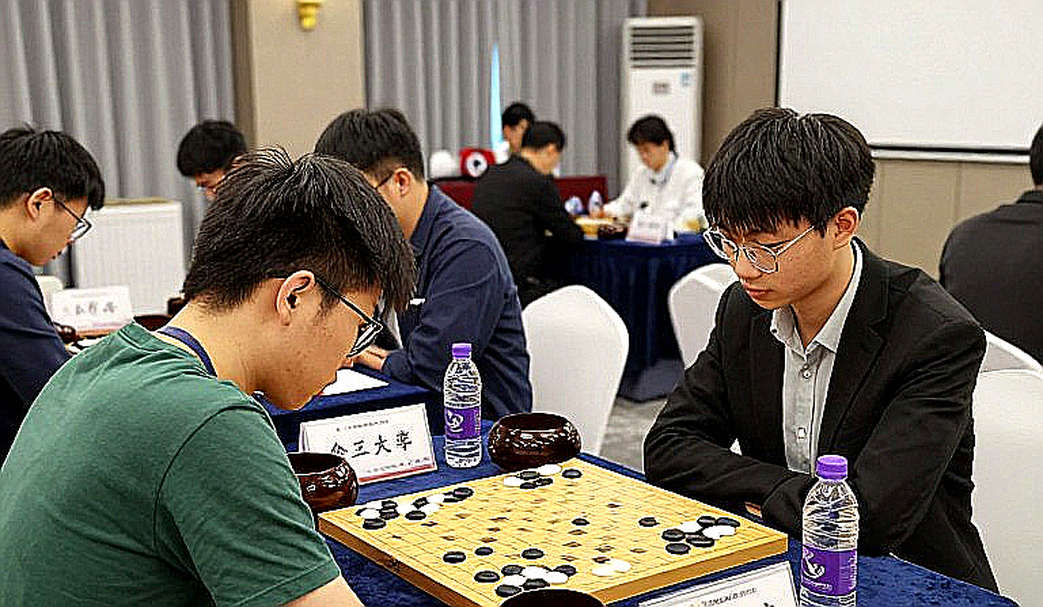
Against this backdrop, Andrew Martin's sixty-minute video does not feel irrelevant to me. It is a mirror. In a mature Western market, someone sells an opening weapon in sixty minutes, while here an entire national structure cannot fix its own pipeline. The gap is not of talent; the gap is of system.
The Dataset of Silence: Six Weeks I Refused to Count
In 2026 the boards were packed away, the stadiums empty. Leonine Chess Club moved its events online. For six weeks I refused to treat online games as data—mouse slips, no touch-move rule, unverifiable settings. For six weeks I refused to count online games; that silence became a dataset.
I then built a time-per-move model on 412 games from Leonine's COVID-era online events. The error rate was roughly 2.3 times that of over-the-board rapid play. This number applies to the Elephant Gambit, because the gambit's whole market rests on fast play. The more popular the gambit is in online blitz, the less verifiable it becomes.
I added a 'platform-adjusted' column to every dataset, and began writing conditions inside the sentence itself rather than burying them in footnotes. The faster the fast-play world advanced, the slower I went. As a result, I now hold the only archived record of that online boom. And it warns me: between the Elephant Gambit's online popularity and its OTB success, there is a wall.
Where the Elephant Gets Stuck: The Conversion Ledger
Now I reason along a path the product copy's author probably did not want. Suppose you learn this gambit, use it in a tournament, and on move two White is rattled by Black's pawn sacrifice. You reach a winning position. And then.
The Batumi ledger says the biggest gap in our culture is converting winning positions. 13 winning positions, 3 conversions. This gap is not an opening problem; it is a problem of endgame training, professional support, and training culture. Bangladesh's Premier Division Chess League hires Indian GMs; players hold day jobs; there is no salaried league. In these conditions, a surprise weapon in the opening can ease your middle path, not your final one.
So the honest account of the Elephant Gambit stands thus: it is a risk product whose value depends on the buyer's endgame skill. For the strong endgame player, it is a profitable weapon. For the weak one, it is a beautiful trap—for himself.
Against Convention: Connection and Causation Are Different
Here I want to draw a contradiction. The product sells itself as an 'overlooked opening', tied to a conventional belief: because mainstream theory discusses this gambit little, it is really a hidden asset no one has noticed. That conclusion is tempting, but data-free.
Low discussion and low merit are not the same. Many openings are rarely discussed because they are genuinely weak, defeated with best play, and thus get no place in major courses. Some are rarely discussed because they are unconventional yet respectable. The only way to tell them apart is to count games. In the Elephant Gambit's case, what is known is that it is famous for weakness, not hidden strength. Here connection and causation are being confused.
Another belief needs breaking: 'unconventional means modern'. No. This gambit is nineteenth-century. Old products can be sold in modern dress, but the game's history does not hide it. I once sent a nineteen-point gap to three Dhaka desks and it came back. That experience teaches that an unpublished truth cannot be false—because truth carries its own definition.
What Is Buried: The Product's Real Usage Note
One line—'used with discretion'—hides the whole usage note. Those two words admit this is not a foundation but a weapon. Honestly titled, it would read: 'An opening weapon for a specific situation'. But that sells less.
My estimate is that this product's target buyer is an improving club player or junior—not a professional. That is not a fault. The fault is that the product does not state its limits clearly. Had a buyer known this is a special-situation weapon, he would buy with the right expectations. Expectation management is the first step of honesty.
Toward the End: What the Next Move Is
I closed the spreadsheet, but kept the question open. This sixty-minute video can do its own job properly—teach an unconventional weapon. But the empty path from the title's Bundesliga to the body's Elephant Gambit is a big signal today.
The question is therefore not for the reader but for the editor: if a title does not recognise its own content, how will the reader recognise what is real and what is recycled. Next round, I want to see one thing—a number beside every opening claim. How many games, what rating, how many conversions. The day that column arrives in every product description, no link will again show me a Bundesliga while selling me an elephant.